The Runic Calendar
The runes were originally writing characters that the Germans began to use in the 2nd century. The runes could also be used in sorcery. The runes were often carved on wooden staves and these staves are believed to be behind the later era, medieval runic calendars.
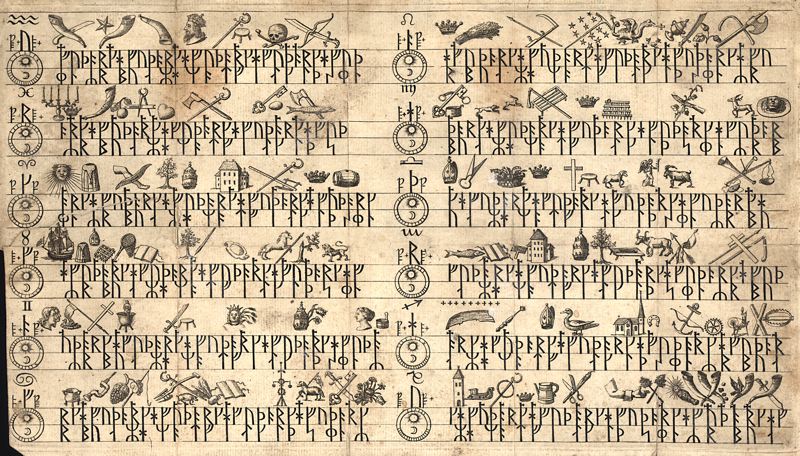
The runic calendar is a perpetual calendar that began to be used in the Middle Ages. The model for the runic calendar was the church calendars that instead of runes had Latin letters and numbers. During the 16th and 17th centuries, runic research began in Sweden, and it is by these runic researchers that the runic calendar and the runic staff are described. The runic staff is an oblong wooden staff on which the runic calendar is engraved.
The runic calendar decreased in importance when, in the 18th century, they switched from the Julian to the Gregorian calendar.
Here, some of the days that are included in the calendar and that take place during Christmas are discussed. The calendar mainly applies to Sweden, but has been used in Finland and also in Denmark and Norway.
In Sweden, preparations for Christmas start early, but Christmas can be said to begin on December 13 and continue until January 13.
December/ Julmånaden/ The Christas Month.
Fourth. Sledge, a chapel. The chapel is enough because it is Saint Barbara’s day and her attribute is a tower with three windows. Barbara was a Saint and die 290 on this day.
Sixth. Snake biting its tail. Now you have to look over your rune staff.
Eighth. Crown. Mary´s Immaculate Conception.
Ninth. A pot. The jug for the Christmas beer to be ready now. Anna has a name day. “Anna with jug”. Anna ore Anne is mother to Virgin Mary.
Thirteenth. Tailor’s scissors, pine blower. The long nights are ending now and it is getting brighter. Pine cones for Lucia. The winter solstice occurred on this day.
Twenty first. a hand with outstretched fingers, two crossed fir branches. The Thomas saga. Thomas doubted that Jesus had risen and let his fingers examine Jesus’ wounds. The Christmas poles must now be erected.
Twenty fifth. A linden child with a halo around its head, horns. The child is the baby Jesus, the horn because it is Christmas.
Twenty-sixth. stones. The first Christian martyr Stefanos is stoned on this day.
Twenty-seventh. eagle, horn. John is the apostle to whom the day is dedicated, his symbol is the eagle. The horn is to show that it is Christmas holiday.
Twenty-eighth. Sword, horn. The sword is to remember the infanticide in Bethlehem, Massacre of the Innocents The horn because it’s Christmas weekend.
January/Tormånaden/The Month of Thor.
First. Raised horn, knife. Raised the horn to remember that the ancestor drank in horn and that Christmas continues and is celebrated. The knife for Jesus’ circumcision on this day.
Sixth. Star. The three wise men visit Jesus. The star is the star that guided them. Epiphany is celebrated in memory of this day.
Thirteenth. Up and down horn. Now the Christmas celebration is over. Twenty days Knut. To remember Saint Canute Lavard who die 1131. Knut = Canute.
 Ideell Kulturkamp