Idag för sjuttio år sedan femte maj 1945!

Idag för sjuttio år sedan femte maj 1945!

Det är nu idag sjuttio år sedan andra världskriget slutade i Europa. Här kommer därför en liten artikelserie som kan vara av intresse.

Svatováclavskà Dobrovolnická Rota kommer ut i strid

Tjeckoslovakien upphörde att existera som stat i början av 1939. Slovakien blev självständigt och efter det att Polen och Ungern tagit över några områden gjorde tyskarna om resten av republiken till protektoratet Böhmen-Mähren.

Tjeckiska samarbetsmän hade under kriget verkar för att en tjeckisk legion skulle sättas upp för att strida på östfronten. Tyskarna var dock skeptiska. Under första världskriget hade tjeckiska regementen mangrant deserterat till ryssarna. Även om det politiska förhållandet var annorlunda så trodde tyskarna att liknade skulle ske igen.

Men med kriget kommande allt närmare protektoratet gjorde att tyskarna nu började ändra inställning och gick med på att en väpnad styrka av etniska tjecker under tyskt befäl sattes upp. Styrkan fick namnet Svatováclavskà Dobrovolnická Rota, även kallad St Weneclavs legion. Denna den mest kortlivade av alla waffen-ss förband sattes upp 5 mars 1945.

Runt 80 man anslöt sig, en del av utrustningen som stövlar och kamouflage kom från ss andra persedlar, en kulspruta fanns att tillgå, annars bara gevär och bajonett. Truppen utbildades av tyskar, högsta tjeckiska befäl var Eduard Chalupa, veteran från första världskriget. Brist på allt var det och maten betog mest av sill och potatis.

På dagen efter två månader sedan förbandet bildades 5 maj kom en del av styrkan i strid med motståndsmän. Upproret i Prag började denna dag. Några soldater övermannades på morgonen när de låg och sov. Andra han få fram vapen och börja en kort eldstrid. Men överraskningsanfallet var totalt och striden blev kort. Några av soldaterna sköts efter att de gett sig. En mindre grupp lyckades slå sig västerut mot de framryckande allierade truppernas linjer och några av dessa ska gått med franska främlingslegionen efter kriget och deltagit i Indokina. Troligen var några av medlemmarna i Svatováclavskà Dobrovolnická Rota infiltratörer från motståndsrörelsen. Eduard Chalupa försökte bränna några dokument om förbandet innan han greps. Han dömdes sedan till fängelse och avled i ofrihet 1960.

Det bör nämnas att några tjecker stred i waffen-ss, men de var med som enskilda och bildade aldrig något eget förband.

Herman Göring släpps från husarresten

Herman Göring är nog en av de mest kända aktörerna under andra världskriget. Han var förutom riksmarskalk chef för tyska flygvapnet och utsedd till Hitlers efterträdare. När den tyske statschefen bestämde sig för att inte lämna Berlin utan stanna till slutet sände riksmarskalken ett meddelande där han ansåg sig få ta över ledningen av Tyskland.  Adolf Hitler blev ursinnig på denna idé och inte blev det bättre av att Göring i meddelandet skrivit att han tänkte försöka få till fred med västmakterna. Göring befann sig i alperna när han skickat telegrammet. Detta skedde den 23 april, dagen efter kom svaret. Göring blev omedelbart avskedad från sina uppdrag och sattes i husarrest. Göring var fängslad under mycket lätta förhållanden. När han fick höra av Hitler valt att avsluta sitt liv och utsett storamiral Karl Dönitz till ny statschef begärde Göring att få komma i kontakt med denne. Det dröjde dock några dagar. Men den femte maj kom bud från högkvarteret att Göring skulle friges. Kort efter fick Göring order att bege sig till de amerikanska linjerna för att förhandla om kapitulationens villkor. Göring ville få till ett möte med Eisenhower, de amerikanska truppernas högste ledare men det nekades. Göring installerades nu hos amerikanska trupper. Då vapnen tystnade valde Herman Göring att gå i fångenskap den 9 maj. Året därpå i oktober valde Göring att ta sitt liv istället för att avrättas som krigsförbrytare.

Kort inbördeskrig i Danmarks huvudstad

4 maj kom det till danskarnas kännedom att tyskarna skulle kapitulera i Danmark dagen därpå. De flesta tyska soldater lydde denna order. Samtidigt kom den danska frivillig styrkan Den danske brigaden över från Sverige. Denna polisstyrka som den kallades officiellt för att inte allt för mycket äventyra Sveriges neutralitet skulle sättas in var det tänkt om tyskarna valt att strida in till slutet. Så skedde inte. Men danska HIPO valde att strida. HIPO, Hilfspolizei var en styrka som satts upp 1944 av danska samarbetsmän, de flesta medlemmar var veteraner från östfronten och varit med i waffen-ss. Dessa kom i strid med såväl danska motståndsrörelsen som trupperna från grannlandet i norr. I eldstriden som följde dödades tre medlemmar i brigaden och några sårades. Många i HIPO valde att strida till slutet. Det förekom sammanstötningar mellan danskar som av olika skäl hamnat på olika sidor under kriget denna dag och dagarna efter. Brittiska trupper anlände till Danmark den 5 maj.

Japansk brandballong över Oregon

Japanerna hade många märkliga vapen under andra världskriget. Ett av dem var brandballonger, fūsen bakudan. Ballongen skulle färdas med vindar mot USA, där skulle den explodera och göra skada. Omkring 9 300 ballonger skickades ut och kanske 300 kom fram. Få gjorde någon större skada. En ballong startade en skogsbrand. Men den 5 maj 1945 i staden Bly i Oregon dödades sex personer av en brandballong. Fem var barn. Det var den enda egentliga flygattacken över USA under kriget.
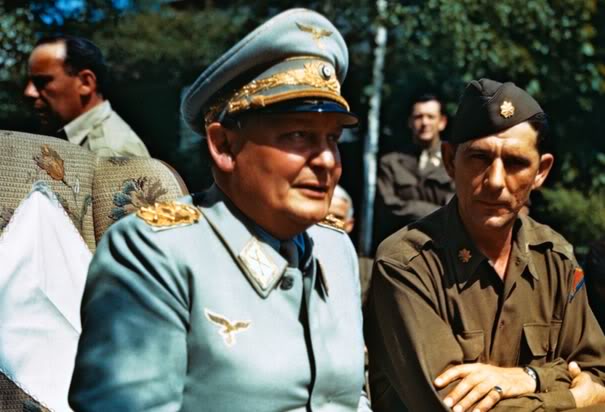
Herman Göring ger sig

Herman Göring kort efter att han blivit krigsfånge.
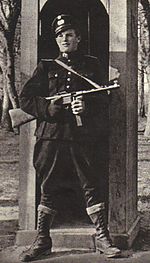
HIPO

Dansk HIPO. Uniformen är en blandning mellan tyskt och danskt.
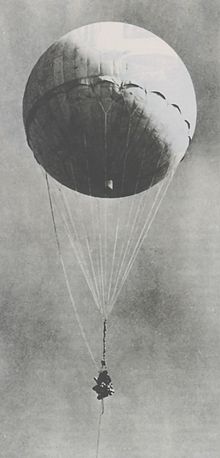
Brandballong

En brandballong som skulle sprida skräck i USA.

Burial as a rite of passage and the Ancestor cult

Burial as a rite of passage and the Ancestor cult

Burned bones

“…In order to become an ancestor a person had to be destroyed both mentally and physically. When someone dies, his/her social persona disappears as well. In its place there is a body, a cadaver that will quickly start to decompose unless the body is disposed of by burial. The cadaver might also be frightening in the eyes of the society; it might be polluted, and hence certain rituals are needed in order to transform the body from one status to the next. The society has to help the body in this transformation process.

Arnold van Gennep’s theory of rites of passage (1909) follows this line of thought. When a person dies he/she is separated from the society, and slowly incorporated into the world of the dead ancestors. In order for this transition to happen the body has to be treated right in the burial process. The body is thus in a liminal phase when the deceased is neither a living person nor yet an ancestor. This might be seen as a frightening or dangerous phase and in order for everything to go right funeral rituals have to be performed. Only if the right rituals are performed the deceased is able to be transformed into an ancestor. This transformation process means that the deceased is being reborn again as an ancestor. He has thus got a new status and a new identity.” (Wikholm & Raninen.)

As the bodies were first cremated in a typical Iron Age burial, this would mean that the body of the deceased person would be visibly deconstructed, and thus the transformation process of disappearing, becoming unrecognizable by the living people and rejoining the collectivity of the ancestors would also be more tangible.

In the beginning of a new era – which nowadays is known as the Migration period – a new cemetery form appeared in Finland and Estonia, called cremation cemetery under level ground” (Fin. polttokenttäkalmisto; Est. madala kivistikuga põletusmatuste väli). This type of cemetery is recognized by the two typical characteristics: weak visibility above ground and collectivity. Collectivity in this case means that the burned bones and the broken artefacts have been scattered around the cemetery. Even though the practice was strong already in the early Iron Age Estonia, the collective character is a significant change in the Finnish funerary custom, as there are only sporadic signs of collective burials during the Roman Iron Age.

In the light of modern archeology, it has been found that the amount of burned human bones in these cemeteries is usually low. It seems that only a part of the burned body ended up in the cemetery, via a symbolic deposition. Even though some parts of the bones were likely left at the pyre, they could have been taken elsewhere instead of the cemetery.

The birth of iron

It is mentioned in Icelandic sagas that significant persons could sometimes be buried in several burial mounds in different locations in order to increase good fortune in farming. Also in Finnish folklore bones could be taken from graveyards to fields to increase the crop. When the harvesting was done, the bones were taken back to the graves. Some ploughing marks found in the bottom soil of the cemeteries are considered as marks of ritual ploughing. There is also another theory of the use of the bones, based on the idea of regeneration, due to the fact that many traces of smithy activity are found in the immediate vicinity of the cremation cemeteries in Finland and elsewhere in Scandinavia. Possibly, a cremation cemetery was considered as a powerful place, which was taken advantage of by the smiths. There is a strong symbolic connection between fire, cremation and the iron heated by the iron smith and the production of iron may be seen as a birth, and that the metal develops social qualities through initiations and ritual technique (there is also a Kalevala rune about the birth of Iron). When making steel, or carbonized iron, it was important to have the right amount of carbon in the iron to keep an edge sharp – this knowledge was very likely possessed by skilled iron smiths, who on the other hand kept their techniques in secret from others. When using bone-coal mixture as a catalyst, the carbon from the charcoal will incorporate into the surface of the iron more easily.

The hardening process, carbonization of raw iron, is part of the iron technology to make the iron more robust. However, people of the pre-Christian Northern Europeans did not separate actions, thoughts and technique; they were all interlinked in cosmology and revealed by rituals, which gave meaning to the material world. The role of the smith changed from 500 BC to AD 1500 and gave him a mystical status in European folklore. In Finnish national epic Kalevala, the hero Ilmarinen – a blacksmith, is sort of a demigod. The mystification of the blacksmith is also found in the Estonian national epic Kalevipoeg, in which the hero of the story travels to Finland to get a powerful sword. The ritual of giving birth weapons from the dead ancestors’ bones could make the role of the blacksmith and his products even more mystified – and valued, in a pre-Christian society.

From collective burial to individual inhumation

“To change the burial customs from cremation to inhumation is an enormous ideological leap. It is a sign of change in the Afterlife beliefs. This must also have affected the conceptions concerning the body and the soul. Did the dead body become frightening in some way? Were special protective rituals needed? How did the community of the ancestors perceive this new way of disposal? Did they accept it?” (Wikholm&Raninen.)

The collective cremations were fused with individual burials during the 6th and 7th centuries, something that is found mainly in the Finnish level-ground cremation cemeteries. The custom seems to disappear again in the 9th century until the late Viking Age when individual burials appear again. Individuality in this case can be seen as concentrations of metal items at the burial sites. In other

words, there was a kind of bi-ritualism in which the collectively scattered bones and individual cremations were done in the same cemetery at the same period of time. This raises questions about how personhood, soul and ancestral existence were seen by the society.

That the individual burials were deposited in the older cremation cemetery suggests that there was continuity in the ancestor cult and the beliefs surrounding it, even though the rituals had changed. Perception of individualism regarding the graves can be only speculated, and perhaps it was only the most important thing for the ritual to simply incorporate the dead into a collective cremation cemetery. This would have given the dead the right to be a part of a shared past within a collective group of ancestors. In other words, it is the place of burial that matters. Perhaps, only certain only certain people were allowed to be individually buried inside the cremation cemeteries, because there has not been found that many inhumations at these cemeteries. Perhaps, the individual burials were also a sign of appearance of new features in the material culture, status-related differentiation and dualism in the conceptions of soul and ancestral existence.

Summarized from:

Anna Wikholm and Sami Raninen (2006) The broken people: deconstruction of personhood in Iron Age Finland. Estonian Journal of Archaeology. 10:2, 150-166.

Terje Gansum (2004) Role the bones – from iron to steel. Norwegian Archaeological Review. 37:1, 41-57.

The information about the national epics added by the writer.

Jüdische Ghetto-Polizei

Jüdische Ghetto-Polizei, Jüdischer Ordnungsdienst, Jewish Ghetto Police also known as the Jewish Police Service and referred to by the Jews as the Jewish Police, were the auxiliary police units organized in the Jewish ghettos of Europe by local Judenrat councils under orders of occupying German army.

Members of the Jüdischer Ordnungsdienst at first did not have official uniforms, often wearing just an identifying armband a hat, and a badge, and were not allowed to carry firearms, although they did carry batons. They were used by the Germans primarily for securing the deportation of other Jews to the concentration camps, but their work encompassed all forms of public order in the Ghetto.

One of the largest police units was to be found in the Warsaw Ghetto, where the Jüdischer Ordnungsdienst numbered about 2500, the Łódź Ghetto had about 1200, and the Lviv Ghetto 500.

During the Warsaw Ghetto Uprising the Jewish police fight for the Germans. Few members of the force survived the war.

Judisk polis

judisk polis 1

judisk polis 3

judisk polis 4

judisk polis 5

judisk polis 6

judisk polis 7

Denna artikel kommer från  bloggen war2war.  This articel coming from the blog war2war.

http://www.war2war.wordpress.com